uconn

Research Misconduct

The University of Connecticut is committed to maintaining the highest ethical standards in the performance, reporting, reviewing and proposing of research and scholarly activity.  To this end, it is the responsibility of all faculty, staff, students, trainees and visiting scientists to refrain from and prevent research misconduct.

Research misconduct means fabrication, falsification, or plagiarism in proposing, performing or reviewing research, or in reporting research results.

  • Fabrication is making up data or results and recording or reporting them.
  • Falsification is manipulating research materials, equipment, or processes, or changing or omitting data or results such that the research is not accurately represented in the research record.
  • Plagiarism is the appropriation of another person’s ideas, processes, results or words without giving appropriate credit. Authorship disputes are not defined as plagiarism in this policy.

Research misconduct does not include honest errors or differences of opinion.

It is also the responsibility of the research community to report suspected incidents of research misconduct.

Policies

Policy on Alleged Misconduct in Research

Non-Retaliation Policy

Reporting Research Concerns

All concerns related to human research, animal research, conflict of interest, research misconduct, research financial accounting, research safety or other research compliance matters should be reported by calling Research Integrity & Compliance at 860-679-2230, Office of University Compliance at 860-486-2530, or the specific area.

Concerns can also be reported anonymously through the REPORTLINE by calling a toll-free number at (888) 685-2637 or via the REPORTLINE website. The REPORTLINE is available 24 hours a day, 365 days a year operated by a private (non-UConn) company. You may contact the hotline to report a concern without giving your name. You will be able to re-contact the REPORTLINE to track your report to provide further information at a later date or to obtain general updates about the status of your concern.

The University welcomes and encourages good-faith reporting. As such, individuals who submit a report or participate in a compliance investigation in good faith are provided protection from retaliation per the University’s Non-Retaliation Policy.

Additional information on reporting concerns can be found at the Office of University Compliance website.

Resources

The following is a list of videos on research misconduct and integrity from the US Office of Research Integrity.

The Lab, Avoiding Research Misconduct – In this interactive movie, you can choose an alter-ego and become a graduate student, post doc, PI or RIO, and make decisions facing you in a case of data falsification. Decisions that can have long-term consequences on your career. The movie addresses topics such as avoiding research misconduct, mentorship, data stewardship, authorship, and more. The movie has versions in English, Spanish and Chinese.

The Research Clinic – In this movie, you can become a PI, a clinical research coordinator, a research assistant, or an institutional review board (IRB) chair, and make decisions that protect research subjects and avoid research misconduct.

Internal Funding Opportunities – Overview

The Scholarship Facilitation Fund program has re-opened


Due to the need to reserve funds for the EMERGE emergency funding program, all other OVPR Internal Funding Programs remain on hold-we will provide updates as more information becomes available.

The Office of the Vice President for Research (OVPR) supports faculty research, scholarship, and creative endeavors through a wide range of internal funding programs.  OVPR internal grants serve as high-leverage, strategic investments in outstanding faculty research projects that are at critical stages of development.  Our internal funding mechanisms are designed to competitively identify projects that fit our key funding criteria--projects that meet the highest disciplinary standards for excellence and are at a "tipping point" where specific work can lead to breakthroughs, external funding, and/or significant recognition.

Recognizing that those crucial moments occur at various stages of the research process (and require different levels of funding to address, depending on your discipline), OVPR internal funding programs include large and small dollar mechanisms that focus on seed funding, completion/publication funding, and commercialization funding. If you are a UConn/UConn Health faculty member who has a project that is ready to move to the next level, we invite you to browse our program guidelines to learn more.

Frequently asked Q & A

The FAQ is organized into five sections; proposal stage, set up stage, manage stage, close out stage and other. Email research@uconn.edu with additional questions. 


PROPOSE

  • Am I eligible for the grant?
    • I am a PhD student – NO
    • I am a Postdoc – NO
    • I am a Research Faculty, Research Specialist - NO
    • I am an Assistant Professor, Associate Professor, Professor-in-Residence, Professor – YES
  • Can I submit two applications as PI to the same competition?
    • Only one submission per PI for the same competition
  • Can I apply to more than one competition in the same year for the same project?
    • Yes, however, you will not receive more than one award for a specific project
    • You can submit multiple applications to different competitions with different projects
  • Why can't I make changes to the budget spreadsheet?
    • You can only complete the green areas in the budget spreadsheet. Formulas are set up to autofill the fringe and totals within the budget spreadsheet
    • If you have any questions about the spreadsheet, please email resarch@uconn.edu
  • How do I indicate that it is a two-year budget when completing the budget sheet?
    • Although projects are expected to be completed within one year, there are exceptions. You can download the budget sheet from the budget guidelines webpage and save it as year 1 and then again as year 2 prior to completing it

SETUP

  • When will the awards be announced?
    • Go to the overview of internal funding competitions and timeline
  • When will the project be funded?
    • Once you have uploaded your signed award letter and completed the compliance section, then the Research Finance Team will review the information, reach out to you if they have any questions and fund your IDC account for the SFF award or set up a new account for the other awards

MANAGE

  • Can I move funds from one budget category to another?
    • You will need to complete a no-cost extension request form  and explain in it how moving funds from one category to another will or will not impact the scope and aims of the project
  • Can I extend the account end date?

CLOSEOUT

  • Once the project is complete, do I need to submit a report?
    • Yes, you will be emailed a link to complete a report (survey format) 3 times so the OVPR can hear all about the wonderful impacts made as a result of your internal funding award.
      • You will receive an email once your project has ended
      • You will receive an email one year from the project end date
      • You will receive an email three years from the project end date

OTHER


Contact Information

Charlotte Nelson, MPA, M.Ed, Internal Funding Coordinator; research@uconn.edu

Internal Funding Program Office Hours: Click this Internal Funding Program Office Hours Link and schedule a virtual meeting with the Internal Funding Coordinator to ask questions, share your research projects and to discuss which internal funding mechanisms best align with your project needs.

Overview of Internal Funding Opportunity Timelines

(Last updated 4/15/26)

Program

Applications open

Applications due (12 noon)

Target for Notifications

Emerge Emergency Funding Program open rolling basis Typically within a 3-5 weeks of application submission
Scholarship Facilitation Fund Cycle 2 Spring 2026 open June 1, 2026 by July 1, 2026
MPS Seed Grant Program in review April 6, 2026 by May 15, 2026
Scholarship Facilitation Fund Cycle 1 Spring 2026 in review March 10, 2026 by April 10, 2026
SPARK Commercialization Technology fund August 17, 2026 September 28, 2026 (LOIs due), January 11, 2027 (invited full proposals due) April, 2027
Research Excellence Program not open n/a n/a
Scholarship and Collaboration in Humanities and Arts Research not open n/a n/a
Convergence Awards for Research in Interdisciplinary Centers  not open n/a n/a
Clinical Research and Innovation Seed Program not open n/a n/a
UConn Justice, Equity, Diversity, and Inclusion Research Initiative not open n/a n/a

Table Key:

Complete / not open
Open for Applications In Review


Innovation Resources, Funding, and Open Source Links


Open Source – External Resources & Tools

General Information

What is Open Source?

Open Source Licenses

Overview of Standard/Popular Licenses

Generally Accepted Licenses

Open Source License Selection

Choosing an Appropriate License

License Differentiator – Interactive License Selection Tool

Tabular Comparison of License Terms

Software Licenses in Plain English


License Compatibility


IPB at UConn Tech Park

The Innovation Partnership Building (IPB), an 113,700 square foot research building, officially opened its doors in 2018. The unique facility boasts state-of-the-art specialized equipment and instrumentation for nanofabrication, precision manufacturing, biomedical devices/sensor development, advanced modeling/simulation and material characterization.  The IPB serves a nexus of intellectual, physical and cyber assets intended to foster industry-academic partnerships for research, innovation technology commercialization and job growth for the State of Connecticut.

For more information visit techpark.uconn.edu
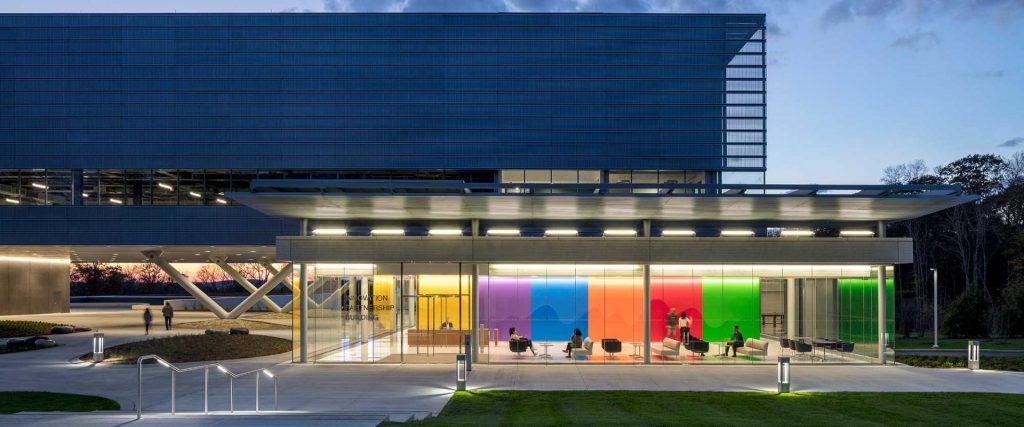
Innovation Partnership Building

Submission

Once the proposal is reviewed by the Pre-Award Specialist and all required documents are in place, the proposal is forwarded to the University’s authorized representative for review, approval and signature.  The signed proposal is then forwarded back to the Pre-Award Specialist. Submission to the sponsor is handled as follows:

Hardcopy (paper) submissions

  • Pre-Award Services returns all signed documents to the principal investigator and/or department administrator.
  • The principal investigator or department administrator submits the final approved proposal to the sponsor.
  • The principal investigator or departmental administrator forwards a full copy of the submitted proposal to Pre-Award Services at preaward@uconn.edu.
  • A full copy of the proposal is filed and is accessible to the principal investigator and department administrator via InfoEd.

Electronic submissions NOT required by the University’s institutional representative

  • Pre-Award Services returns all signed documents to the principal investigator and/or department administrator.
  • The principal investigator or department administrator submits the final approved electronic proposal to the sponsor.
  • The principal investigator and/or department administrator monitors the proposal submission through sponsor acceptance of the proposal for review. If there are errors requiring correction to the proposal or application, the principal investigator and/or department administrator makes the necessary corrections and contacts Pre-Award Services to review and approve.
  • The principal investigator or departmental administrator forwards a full copy of the submitted proposal to PreAward Services at preaward@uconn.edu.
  • A full copy of the proposal is filed and is accessible to the principal investigator and department administrator via InfoEd.

Electronic submissions required by the University’s institutional representative:

  • Pre-Award Services submits the final approved electronic proposal to the sponsor.
  • Pre-Award Services forwards all submission notifications and confirmations to the principal investigator and/or department administrator.
  • Pre-Award Services, the principal investigator and/or department administrator monitors the proposal submission through sponsor acceptance of the proposal for review. If there are errors requiring correction, the principal investigator and/or department administrator makes the necessary corrections and contacts Pre-Award Services to resubmit.
  • A full copy of the proposal is filed and is accessible to the principal investigator and department administrator via InfoEd.

UConn SPS Budget Template

Effective DECEMBER 1, 2025
All UConn internal proposal budgets submitted to SPS Pre-Award
must be provided on the updated SPS Budget Template (current version 5.0)
Please note that internal templates must also be transferred to appropriate sponsor budget forms

Budgeting

The proposal budget is the financial plan of action that reflects the costs required to perform the proposed work statement.  The following information has been prepared to help you develop your budget plan.  See our Budgeting and Costing Guide for current information on fringe benefits, graduate stipends, Facilities and Administration (F&A) rates (Indirect Costs) and other budgetary matters.

It is important to demonstrate that the budget proposed is reasonable.  A budget justification should be submitted in order to allow each budget item to be explained relative to the proposed research.  The specifics of the sponsoring agency’s budgetary guidelines should be followed carefully.  Budgets should be prepared for the entire proposed project. Both direct and F & A costs should be identified in the budget.

Research Compliance

Research Integrity & Compliance Services (RICS)

Research Integrity & Compliance Services (RICS) oversees compliance requirements at the university related to research. Policies, procedures and guidelines are designed to support the responsible and ethical conduct of university research and to ensure adherence to all laws and regulations guiding research.  Major areas of compliance include:

  • Animal Subjects/IACUC
  • Human Subjects/IRB
  • Institutional Biosafety (biohazards, DNA, Select Agents, Dual Use research)
  • Research Ethics (COI, RCR, misconduct)
  • Research Safety and Security (biosafety Data use
  • Export Controls

For more information, please contact Research Integrity & Compliance Services


Financial Conflict of Interest (FCOI)

The University requires, at a minimum, an annual disclosure from all faculty members regarding outside activities and financial interests.  At the time of proposal submission, investigators must completed their online FCOI disclosures in the InfoEd External Interests Module. Some sponsors require FCOI disclosures at the proposal stage and the University will not submit proposals until such disclosures have been completed.

All subrecipients must certify, at the proposal stage, that its institution has implemented and enforced an FCOI policy compliant with the respective regulations or that they lack a compliant FCOI policy and will implement a policy prior to subaward issuance.  Additionally, the responsible personnel at the subrecipient must complete and submit the External Investigator Disclosure Form.

For more information, please contact Financial Conflict of Interest

Proposal Contents

Most sponsors publish guidelines on how to prepare a proposal and the requirements.  The application package may also include forms that require a signature from an authorized official. Sponsor instructions should be followed carefully for format, content, and budget and submission requirements.

The following is a list of common proposal elements. If there are no sponsor guidelines these documents represent the minimum required by Pre-Award Services. For most sponsor agencies, proposals contain most or all of these elements.  (Specific agency guidelines, if available, should always be followed.)

  • Proposal guidelines from sponsoring agency or website link: assists with reviewing proposal and ensuring all sponsor requirements are met prior to submission.
  • Internal Proposal Review Form: complete for all proposals and secure signatures of the Principal Investigator, Co-Principal Investigator(s), Department Chair, Unit Head, and in some cases Dean as appropriate.
  • SPS Proposal Cover Page: complete if the sponsor does not provide a cover page for approval signature. Please refer to the Frequently Requested Information for assistance with completing the sponsor cover page. The University’s Authorized Representative signs all proposals on behalf of the University.
  • Proposal Narrative: describe the objectives, methodology and significance of the proposed project.
  • Budget Spreadsheet: provide a reasonable estimate of expenses for each budget category. Include cost sharing/matching only if specifically required by the funding agency. Please refer to the Budgeting and Costing Guide for assistance.
  • Budget Justification: provide a detailed explanation of all items listed in the budget. Please refer to the budget justification guide for assistance.
  • Electronic application (if applicable): provide a completed application or access to the completed application.
  • Subcontracts (if applicable): provide a statement of work, budget, budget justification, F&A Rate Agreement and Information and Compliance Form for Subrecipients, signed by an authorized official of that organization.  Please refer to the  Subaward Determination Guidance for assistance with determining the subrecipient versus contractor relationship during the budget preparation stage.
  • Research Compliance Review: Federal regulations and University policies require that various University committees approve certain proposed activities.  Compliance review and approvals for Animal and Human Subjects, Radioactive Substances, Bio-hazardous Substances, Controlled Substances, and Recombinant DNA may be necessary before your proposal can be signed.  These areas should be designated on the Internal Proposal Review Form.  Please refer to the Research Compliance section of this website for specific compliance office contacts who can assist with any approvals necessary for your proposal.
  • Optional items: The proposal contents listed below are fairly standard items required by many sponsors and may be included as part of your proposal:
    • A table of contents
    • Bibliography of pertinent literature
    • Vitae of all senior personnel
    • Recent publications
    • List of collaborators
    • Active and pending support (generally, sponsors request information on current (active/awarded) and pending support to evaluate potential scientific and/or commitment overlaps; this list should be complete including all support whether or not that support is funded through the University)
    • Description of available facilities and equipment

Development

The Pre-Award Team within the Office of the Vice President supports faculty, staff, and graduate students in their research and creative endeavors. Working with faculty and staff to increase external funding and to provide opportunities for professional growth is critical to the overall health of the University. We are here to help, so contact us early!

Financial Conflict of Interest (FCOI) Public Accessibility Request Form

  • This field is for validation purposes and should be left unchanged.
  • Welcome to the FCOI Public Accessibility Request form. Please complete this form to request information on a FCOI indentified on or after 8/24/12 related to Senior/Key investigators associated with a Public Health Service (PHS) funded award.

    If you need assistance in identifying the sponsor's award number and/or precise spelling of the Senior/Key investigator's name, please access the National Institutes of Health's RePORT tool for assistance at: https://reporter.nih.gov/ or https://report.nih.gov/

    Please enter the information below. Required fields necessary to process your request are marked (*):

  • Part A. Information About You

  • Part B. Information About Your Request

  • Format: 1R01CA012345-01
  • By checking the below box, I confirm that I am a member of the public requesting access to the above information.

FCOI Electronic Submission System

System Access

Instructions for Investigators

  • To access self-service handouts with step-by-step instructions on how to perform various functions within the UConn InfoEd External Interests system, see: How-To Guides and Materials

Tips on completing a disclosure form

  • You will receive an e-mail invitation to complete a disclosure in InfoEd when your financial disclosure is due to expire.
  • Instructions on how to log-in (and a link to the system) are included in the e-mail invitation.
  • Use your UConn NetID username (e.g., abc12345) and password credentials to login. For NetID assistance, visit https://netid.uconn.edu/ for assistance looking up and resetting your UConn NetID password.
  • Move around the disclosure form by using the Next and Back buttons at the top of the page.
  • Save as you go using the Save button in the upper right corner.
  • Exit the form without submitting by closing the window (be sure to Save first). Return again later.
  • Any of the questions marked with a red asterisk (*) must be completed before a page can move forward. If any items are missing, a Mandatory Questions window will appear (click on each question to navigate to that item).  Missing items are also outlined in red.
  • To skip around previously-completed sections, use the hyperlinked navigation buttons at the top of the page (under the University’s logo) to move to that page on the form (e.g., TRAINING, SCREENING, etc).
  • Be sure to submit the form on the CERTIFICATION & SUBMISSION page by clicking the Certify and Submit button when you have finished completing your disclosure.
  • You will receive an email after submitting your disclosure.

Contacts for questions and assistance

  • Questions regarding the form or the disclosure requirements may be sent to fcoi@uconn.edu.  You may also contact an FCOI Research Compliance Monitor directly.
  • If you experience technical issues while completing your disclosure in InfoEd, please contact the eRA Help Desk at era-support@uconn.edu or 860.486.7944 (Mon-Fri, 8:00 AM – 4:30 PM).

Add Undergraduate Students to InfoEd

The following URL, which requires NetID authentication, provides a near real-time, self-service method for adding current University of Connecticut undergraduate students to the Storrs and Health Center InfoEd systems with baseline (default) security.

UConn Add InfoEd Undergaduate Student(s)

Once logged in, simply enter any of the following (partial entries are accepted) and click the Blue Search button on the right:

  • Name (Last, First, MI)
  • email address (firstname.lastname@uconn.edu – all lowercase)
  • NetID
  • PeopleSoft ID

Check the box to the left of the student’s name and click the green “Add selected users to InfoEd” button at the bottom of the grid.  The student will have an active (valid) account in both InfoEd systems within 20 minutes between the hours of 7AM-10:45PM, seven days per week.

Note: Only students in the current search results set can be added.   To add more students, simply repeat the search, select, and add process, as necessary.

If you experience any difficulties with this website, please contact the eRA Help Desk at 860.486.7944 between the hours of 8AM-4:30PM M-F, or email era-support@uconn.edu and someone will get back to you.

Scholarship Facilitation Fund Spring 2018

The Office of the Vice President for Research (OVPR) is pleased to announce the recipients of the Spring 2018 Scholarship Facilitation Fund (SFF) Awards. Funding support totaling $50,950 will be granted to 30 exciting faculty projects.

The SFF program offers crucial support to faculty research, scholarly activities, creative works, and interdisciplinary initiatives. These competitive awards provide up to $2000 to assist faculty in the initiation, completion, or advancement of these projects.

Additional information about the program, including the guidelines and application form, are available on the OVPR website. The deadline for the Fall 2018 awards is June 1, 2018.

The Spring 2018 SFF awardees are:

Jorge Aguero, Economics, Does Educating Girls Promote Long-Run Economic Development? Evidence from Zimbabwe

Ellen Carillo, English, Teaching Readers in Post-Truth America

Andrea Celli, Literatures, Cultures, and Languages, Hagar’s Suffering: A Counter-Reformist Subject. The Roman Patronage, and the Invention of ‘Abrahamic Religions’

Amanda Denes, Communication, Testing the Moderating Effects of Genotypic Variation on the Brain Mechanisms of Empathy

Shareen Hertel, Political Science, Tethered Fates: Promoting Cooperation between Communities and Corporations

Stephanie Kennedy, School of Social Work, Attitudes Toward Ex-offenders: An Exploration of Felt and Enacted Stigma

Kyounghae Kim, School of Nursing, Factors Associated with Human Papillomavirus Vaccine Administration: Findings of a Retrospective Study of Pediatric Clinics in Connecticut

Alexander Kovner, Physics, Quasi Collectivity in Proton-proton Collisions at High Energy

Brenda Kurz, School of Social Work, The Development of an Interprofessional Pain Management Group Using Interviews with Key Informants

Fred Lee, Political Science, Extraordinary Racial Politics: Four Events in the Informal Constitution of the United States

Seok-woo Lee, Materials Science and Engineering, Superelasticity and Cryogenic Linear Shape Memory Effects of CaFe2As2

Kathryn Libal, School of Social Work, Citizen Mobilization and New Solidarities Opposing European and US Restrictionism

Margaret Lloyd, School of Social Work, Assessing CAPTA State Plans: A Policy Implementation Evaluation

James Magnuson, Psychological Sciences, Interaction in Spoken Word Recognition Models: Feedback Helps

Samuel Martínez, El Instituto, 2018 Eyzaguirre Lecture: Professor Fernando Rosenberg, Brandeis

Melissa McKinney, Natural Resources and the Environment, Validating a Commercially Available Canine Multiplex Cytokine Assay Kit to Measure and Quantify Polar Bear Cytokines

Stuart Miller, Literatures, Cultures, and Languages, From Temple to Home to Community: The Survival and Transformation of Ancient Jewish Life in the Wake of Destruction

Spencer Nyholm, Molecular and Cell Biology, Reproductive System Symbiotic Bacteria are Conserved between Two Distinct Populations of Euprymna scolopes from Oahu, Hawaii

Michael Orwicz, Art and Art History, Museums of Memory: Justice and Reconciliation in Post-Conflict Latin America

Linda Pescatello, Kinesiology, Using the Immediate Blood Pressure Benefits of Exercise to Improve Exercise Adherence: A Pilot Study (PULSE)

Daisy Reyes, Sociology, How Colleges Shape Latino Experiences Before and After Graduation

Lisa Werkmeister Rozas, School of Social Work, Stewarding the Social Work Profession in the Area of Diversity: The Role of Doctoral Education

Ilya Sochnikov, Physics, Conference: Entangled Orders and Quantum Criticality

Angela Starkweather, School of Nursing, An Exploratory Analysis of Circulating Endocannabinoid-related Lipidome Associated with the Transition from Acute to Chronic Low Back Pain

Scott Stephenson, Geography, Geography Colloquium Series

Steven Szczepanek, Pathobiology, Role of the AP-1 Transcription Factors in Long-term Immunity to Pneumococcal Vaccines

Judith Thorpe, Art and Art History, Like A Whisper, Limited Edition Portfolio, by the Hadrian’s Wall Working Group

Nathaniel Trumbull, Geography, Coastal Perspectives Lecture Series, Avery Point Campus

Miriam Valdovinos, School of Social Work, Health Effects Related to Intimate Partner Violence Impacting Undocumented Latina Immigrant Women

Ryan Watson, Human Development and Family Studies, LGBTQ+ Sexual Health: Foundational Investigations for Improving Health & Well-being of Vulnerable Populations

Back to SFF Awards

Scholarship Facilitation Fund Fall 2018

The Office of the Vice President for Research (OVPR) is pleased to announce the recipients of the Fall 2018 Scholarship Facilitation Fund (SFF) Awards. Funding support totaling $52,791.77 will be granted to 36 exciting faculty projects. An additional $7,950.00 in matching funds will be granted to support a number of research symposia / colloquia.

The SFF program offers crucial support to faculty research, scholarly activities, creative works, and interdisciplinary initiatives. These competitive awards provide up to $2000 to assist faculty in the initiation, completion, or advancement of these projects.

Additional information about the program, including the guidelines and application form, are available on the OVPR website. The deadline for the Spring 2019 awards is December 1, 2018. Note that this is a change from previous competitions to allow adequate time for application processing before awards are effective on January 1.

The Fall 2018 SFF awardees are:

Daniel Adler, Anthropology, Tracking the Earliest Dispersal of Humans from Africa at Haghtanak-3, an Early Pleistocene Archaeological Site in Northern Armenia

Jorge Aguero, Economics and El Instituto, Can Inclusive Education Programs Reduce Racial and Gender Discrimination in the Labor Market?

Emma Amador, History (and El Instituto), Contesting Colonial Citizenship

Mary Anne Amalaradjou, Animal Science, Early and sustained application of probiotics to improve growth and performance in chickens

Brian Aneskievich, Pharmaceutical Sciences, Publication of a Critical Evaluation of Current Literature, Emerging Trends, and Future Research Foci for the Anti-Inflammatory Protein TNIP1

Alfredo Angeles-Boza, Chemistry, Mechanistic Studies of N2 Binding and Activation

Alexander Anievas, Political Science, Legacies of Fascism: Race and the Far-Right in the Making of the Cold War

Saraswathi Bellur Thandaveshwara, Communication, Media Psychophysiology Lecture and Workshop

Pamela Brown, English, The Diva’s Gift: The Italian Actress and the Shakespearean Stage

Brenda Brueggemann, English, Posting Mabel: An Epistolary Biography of Mabel Hubbard Bell

Clewiston Challenger, Educational Psychology, Dr. Challenger’s Transition to College Program for Student-Athletes (CTCPSA)

Chi-Ming Chen, Psychological Sciences, Neuronal oscillations in dysfunctions of obsessive-compulsive disorders

Ashwin Dani, Electrical and Computer Engineering, Visual Tracking Using Sparse Coding and Earth Mover’s Distance

Debanuj DasGupta, Geography, Precarious Transgender Subject and Shrinking Urban Spaces in Kolkata

Ana Maria Diaz-Marcos, Literatures, Cultures and Languages, Stages of Crisis: Spanish Women Playwrights in the 21st Century

Maria Gordina, Mathematics, Workshop “Functional inequalities in probability”

Solomiya Ivakhiv, Music, Singles and Doubles: Haydns, Mendelssohn and Hummel Double Concertos

Walter Krawec, Computer Science & Engineering, Numerical Tools for Practical Limited-Resource Quantum Cryptography

Maria LaRusso, Human Development and Family Studies, Intervening with Behaviorally Challenging Students in Schools: A Pilot Study of Collaborative and Proactive Solutions

Glen Macleod, English, Wallace Stevens and Surrealism—Public Lecture as part of “UConn Celebrates Wallace Stevens in Hartford”

Philip Mannheim, Physics, Sabbatical Research at Stanford University

Samuel Martinez, El Instituto: Institute of Latina/o, Caribbean, and Latin American Studies, 2018 Mead Lecture: “Immigration in the Time of Trump”

Deborah McDonald, Nursing, The Analgesic Adverse Drug Response Measure: Development and Psychometric Testing

Matthew McKenzie, History, Breaking the Banks: Representation and Reality in New England Fisheries, 1866-1966.

Liansu Meng, Department of Literatures, Cultures & Languages, Man/Woman, Machine/Nature: Modern Chinese Poetry at the Intersection of Industrialism and Feminism (1915-1980)

Yonatan Morse, Political Science, Legislative Candidacy in Tough Environments: The Case of Cameroon

Nitis Mukhopadhyay, Statistics, Sabbatical Leave Fall 2018: Major Book Revision and Research Trips

Shayla Nunnally, Political Science, The Black Class Reunion Oral History Project

Kim Price-Glynn, Sociology, Contradictions of Caregiving: Negotiating Parenting, Child Care, and Labor

Sarah Reed, Animal Science, Alterations in insulin-like growth factor signaling in maternal and fetal placental tissues as a result of poor maternal nutrition

Barry Rosenberg, Art & Art History, Two International Centers for Contemporary Art: London and Paris

Marcus Rossberg, Philosophy and UConn Logic Group, Logic Group Colloquium

Susan Schneider, Philosophy, Designing the Mind: AI, Brain Enhancement, and the Nature of the Self

Matthew Singer, Political Science, PREPPS: The Political Representation, Parties and Presidents Survey

Christine Sylvester, Political Science, Commemorating War Defeat: Japan and Australia

Whitney Tabor, Psychology, Escape from Fraught States: Testing a Web-based Mechanism for the Study of Group Coordination

Brian Waddell, Political Science, Transcription of interview tapes

Lingling Wang, Finance, Textual Analysis on the Compensation Discussion and Analysis

Xiaodong Yan, Mathematics, Recent progress in multiscale nonlocal PDEs

Jing Zhao, Chemistry, Study of the electron transfer mechanism from colloidal quantum dots to molecular electron acceptors

Back to SFF Awards